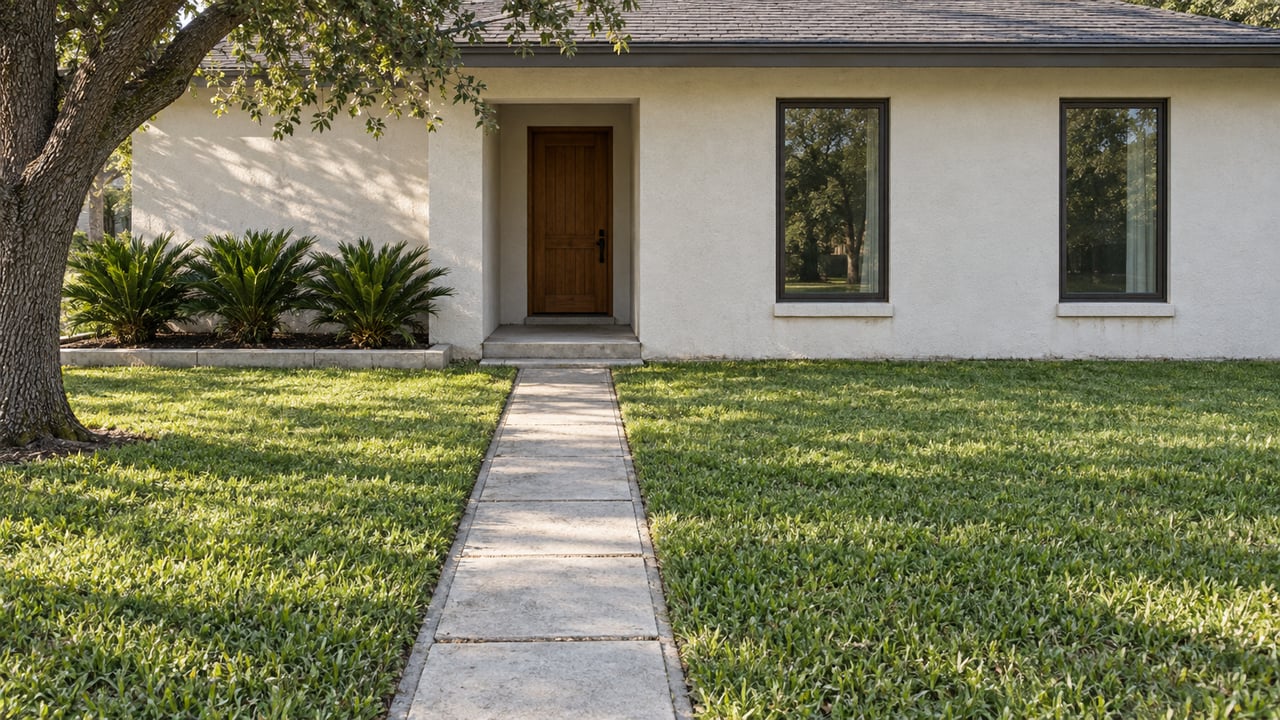
Two homes on the same street in Marsh Oaks, same lot size, same age of roof. One already connects to Atlantic Beach's central sewer system. The other still runs on a septic tank that may or may not be scheduled for the city's next funded conversion. Nothing about the listing photos tells you which is which. The parcel record does, and so does a city tracker most buyers never think to check before they write an offer.
Marsh Oaks is the last real pocket of septic in Atlantic Beach, and the city is actively working through it. That makes the timing of a specific home's conversion, not just its existence on septic, the detail that separates a manageable transaction from an expensive surprise.
A Neighborhood-Sized Problem, Almost Solved
Atlantic Beach has been chipping away at septic tanks since 2000, when the city had roughly 400 of them. Today it's down to about 46, and the city's own materials point to where most of the rest sit: Marsh Oaks, a low-lying area the city itself describes as especially susceptible to coastal flooding, with septic systems that are particularly prone to failure in exactly that kind of terrain.
That's not a hypothetical risk. It's the stated rationale the city gives for prioritizing this neighborhood over any other remaining septic pocket in Atlantic Beach.
The Current Round: 14 Homes, One Grant, One Boundary Problem
At a July 20 budget workshop, Atlantic Beach Public Utilities Director Troy Stevens laid out the capital plan carrying this work forward. It includes a $2.75 million ground storage tank at Water Plant 2, a $950,000 replacement of aging water mains along Seminole Road, and a $700,000 grant-backed retrofit of a lift station. Tucked into that same plan is a septic-to-sewer conversion for 14 homes in the Marsh Oaks and Begonia area.
Those 14 homes sit inside a larger 56-home footprint that crosses the city line, meaning a meaningful share of the septic tanks in this immediate area belong to parcels outside Atlantic Beach's jurisdiction entirely. The city can fund and schedule a conversion for a home inside its limits. It has no comparable mechanism for a neighbor thirty feet away who happens to sit in unincorporated county land. Two septic tanks on the same block can be on completely different administrative tracks, and neither the yard nor the driveway tells you which one you're looking at.
The 14-home group has real money behind it. Atlantic Beach received a $312,500 state legislative appropriation earmarked specifically for converting those tanks, and Stevens referenced a 50 percent matching grant covering a meaningful share of retrofit costs in places, with staff preparing additional grant applications to push homeowner costs down further. City Manager Kevin Hogancamp said the city plans to publish a capital projects tracker called OpenAB so residents can follow exactly where each project stands.
That tracker is the tool a buyer or seller should actually be using here, not a general assumption about how septic works in Florida.
What A Septic Tank Actually Costs When There's No Subsidy Behind It
Outside of a grant-funded program like this one, converting a home from septic to sewer typically runs $5,000 to $20,000 out of pocket in 2026, covering the connection fee, the line run from house to street, decommissioning the old tank, permits, and yard restoration. That range is the baseline every Marsh Oaks buyer should carry in their head, because it's the number a homeowner faces if their parcel sits outside the current funded cohort and the city hasn't reached them yet.
It's also the reason the current $312,500 appropriation matters as much as it does. Split across 14 homes, state money alone covers a substantial share of what a homeowner would otherwise pay entirely on their own, before the city's additional grant applications are even factored in. A buyer purchasing one of those 14 homes today may be inheriting a conversion that's already funded, already scheduled, or already complete. A buyer purchasing a septic home three doors down, outside that cohort, is inheriting an open-ended timeline and a bill nobody has agreed to help cover yet.
What To Ask Before You Write An Offer
A septic tank on a listing sheet is a fact. Whether that tank is inside the current funded conversion group, waiting on a future round, or sitting on a parcel the city can't currently reach is a status, and status changes. Before an offer goes in on a Marsh Oaks property, it's worth confirming a short list of things directly rather than assuming the answer:
- Whether the specific parcel is inside the 14-home group receiving state and grant funding right now, or outside it
- Whether the property is inside Atlantic Beach city limits or in the portion of the broader 56-home area that falls under the county
- What the seller can produce on septic permit history, age, and any prior inspection or pump-out records
- Where the property shows up, once published, on the city's OpenAB capital projects tracker
- Whether a lender or appraiser is treating the septic status as a factor in financing, since sewer-connected homes generally clear underwriting with fewer questions than septic ones
None of these questions require guesswork. They require a phone call to the city's public utilities office or a look at public project materials, and they change what a buyer is actually agreeing to pay for over the life of ownership.
What This Means If You're Comparing Two Marsh Oaks Listings
A home already connected to sewer, or one inside the current funded conversion group, carries a lower and more predictable long-term cost. A septic home outside that cohort carries a real number attached to it eventually, somewhere in that $5,000 to $20,000 range, on a timeline the city hasn't committed to yet. Neither situation is disqualifying. Both are knowable before closing, and both are the kind of detail that separates two homes that look identical on paper.
Marsh Oaks isn't a neighborhood where septic status is a static fact you can price once and move past. It's a neighborhood in the middle of an active, partially funded, partially bounded infrastructure project, and the parcel you're looking at determines which side of that project you land on.
A Few Direct Questions
How many septic tanks are left in Atlantic Beach? Roughly 46 as of the city's most recent figures, down from about 400 in 2000, with the majority concentrated in Marsh Oaks.
Is every Marsh Oaks septic tank part of the current conversion project? No. The current funded round covers 14 homes inside city limits. The broader area includes additional parcels outside Atlantic Beach's jurisdiction that aren't part of this particular funding package.
Does connecting to sewer change what a home is worth? It changes what a home costs to carry going forward, since sewer-connected properties don't face the pump-out, drainfield, or replacement costs septic systems eventually require, and they typically move through financing and inspection with fewer questions attached.
If you're weighing an offer on a Marsh Oaks address and want a straight answer on where that specific parcel stands before you write it, Holly Reaves can help you get the parcel's actual status alongside the rest of your due diligence.
