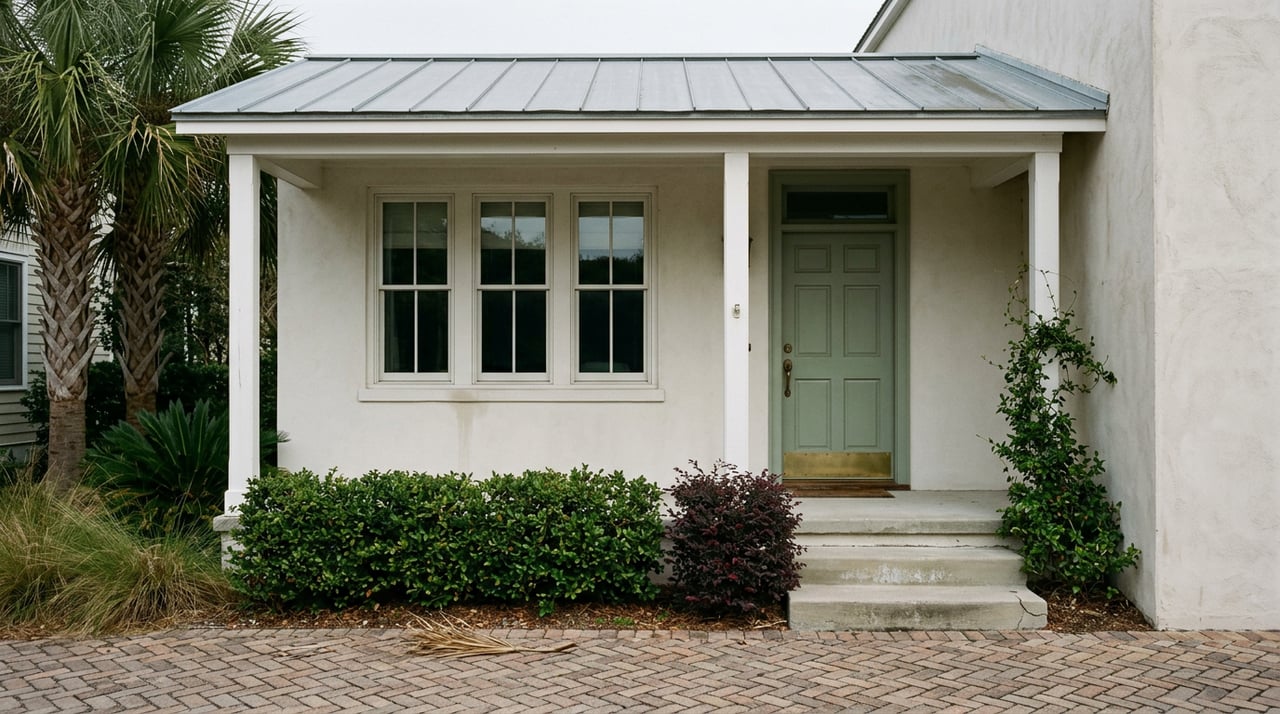
For buyers planning renovations, the timeline can hinge on what happens after an offer is accepted, when city reviews come into play.
In St. Augustine, buyers may need to clear two separate city review processes that don't exist in the same form anywhere else on the First Coast. Understanding them before you write an offer, not after, is the difference between a smooth close and a renovation plan that stalls before it starts.
Two Reviews, One Closing Date
The City of St. Augustine says that most exterior changes to a property inside one of St. Augustine's five Historic Preservation zoning districts need a Certificate of Appropriateness from the Historic Architectural Review Board. That covers windows, doors, roofing, paint color, fences, additions, almost anything visible from the street. HARB meets once a month, typically the third Thursday at 1 p.m. in the Alcazar Room at City Hall on King Street, and a Certificate of Appropriateness is required before a building permit can even be issued.
Separately, if a project disturbs ground within a designated Archaeology Zone, it may trigger a review by the City Archaeology Program, a process that has nothing to do with HARB and runs on its own timeline.
Since January 1, 2025, the City of St. Augustine has bundled these reviews earlier in the process. A change tied to a new state law shortening permit issuance windows created what the city calls a Land Development Application, which requires zoning, historic, archaeology, public works, and utilities review to be completed before a building permit application can even be submitted. That's a real improvement over the old sequence, where a buyer could clear HARB and then discover an archaeology hold waiting on the other side. But bundled review still means both boxes have to be checked, and checking two boxes takes longer than checking one.
What Actually Triggers The Archaeology Review
This is the piece most out-of-town buyers have never heard of, because it isn't unique to historic homes. It's unique to St. Augustine as a city, and the City of St. Augustine traces the process to a 1987 ordinance written to protect what's buried under one of the oldest continuously occupied sites in the country.
The City of St. Augustine says the trigger is mechanical, not aesthetic: any ground-disturbing project inside a designated Archaeology Zone that exceeds 100 square feet in area and goes deeper than 3 inches requires review. A new pool. A room addition. A footer for a fence line. None of these care whether the house itself is historic. What matters is whether the dirt underneath it sits inside Zone I, II, or III, and each zone carries its own fee structure tied to the estimated cost of construction.
| Archaeology Zone | Review Fee |
|---|---|
| Zone I | 1.5% of estimated construction cost |
| Zone II | 1.25% of estimated construction cost |
| Zone III | 1% of estimated construction cost |
The fee floor is $50 and the cap is $25,000, and the city advises that a single-family investigation generally takes two to four weeks once it starts, with commercial projects allotted an additional eight weeks because larger footprints tend to disturb more. That window is manageable if you know to plan for it before closing. It's a scheduling crisis if you find out about it after you've already lined up a contractor for a spring pool install.
The Lincolnville Wrinkle
Here's where a lot of buyers get their assumptions backward. Lincolnville is listed on the National Register of Historic Places and includes homes recognized on the ACCORD Freedom Trail, and it reads, correctly, as one of the most historically significant neighborhoods in the city. What it is not, according to city zoning records, is one of the five local Historic Preservation zoning districts that trigger automatic HARB review the way downtown's colonial core does.
National Register status protects a neighborhood's story. Local HP zoning is what actually controls what you can do to a specific house.
That distinction matters because National Register recognition and local zoning overlay protection are not the same regulatory tool, and buyers routinely assume that if a neighborhood is famous for its preservation, every home in it carries the same review requirement as one two blocks over in a designated HP district. Whether a specific Lincolnville parcel sits inside an HP zone, an archaeology zone, both, or neither depends on the address, not the neighborhood's reputation, which is exactly the kind of detail worth confirming with the city's zoning map before you assume your renovation timeline.
Before You Write The Offer
A few questions answered during due diligence save weeks later:
- Pull the property's zoning designation through the city's interactive GIS map to confirm whether it sits in an HP district, an Archaeology Zone, or both.
- Ask the seller whether any prior renovation work already has an approved Certificate of Appropriateness on file, since that history can speed up your own application.
- If the lot sits in a flood zone, request a current elevation certificate. Florida Statute 553.79(26) allows an exemption from HARB review for single-family structures where a sealed survey shows the finished floor elevation already sits below the city's required base flood elevation, a narrow but real shortcut for some waterfront-adjacent parcels.
- If your renovation plans include a pool, addition, or anything breaking ground beyond a few inches, budget the archaeology fee into your renovation number now, not after your contractor pulls a permit.
The Tax Break Buried In The Ordinance
The friction runs both directions. St. Augustine's Ad Valorem Tax Exemption Program offsets some of what preservation costs, provided a property is individually listed in the National Register, contributing to a National Register district, or designated a local landmark. Qualifying improvements need to meet the Secretary of the Interior's Standards for Rehabilitation, get HARB sign-off, and total at least $20,000 or 50% of the structure's assessed value, whichever is less, with at least 25% of that work landing on the exterior or foundation. For an owner planning a real restoration rather than a cosmetic refresh, that's a meaningful offset against a process that otherwise reads as pure cost and delay.
Why The Slower Clock Might Be The Point
None of this is a reason to avoid Lincolnville or the historic core. It's a reason to price the timeline into your expectations the same way you'd price in a longer inspection period on a well and septic property outside city limits.
What that slower clock protects is the reason people want these blocks in the first place. Lincolnville's dining corridor between West King Street and Bridge Street, anchored by spots like the Ice Plant Bar and St. Augustine Fish Camp, exists inside a streetscape that hasn't been allowed to modernize itself into something generic. The Corner Market still sells baked goods and gourmet products a few doors down from homes with the same wideset porches they had a century ago. Dr. Robert B. Hayling Freedom Park and Eddie Vickers Park give the neighborhood its green space without a single new subdivision entrance sign in sight. The Lincolnville Historic Preservation and Restoration Society runs the annual Lincolnville Festival, Porch Fest, a Jazz Festival, and Juneteenth events that only work because the built environment around them hasn't been flattened into sameness.
A 137-day average on market, against a 58-day national figure, speaks to the neighborhood's market pace; the review process adds a separate timeline for buyers planning renovations.
A Few Direct Questions
Does every home in St. Augustine's historic downtown need HARB approval for renovation work? Most exterior work inside one of the five Historic Preservation zoning districts needs a Certificate of Appropriateness. Interior work generally doesn't trigger review unless it affects a protected exterior feature.
If a home isn't in a designated HP zoning district, is it safe to assume no review applies? Not necessarily. A property can sit outside the five local HP districts and still fall inside an Archaeology Zone, which triggers a separate review tied to ground disturbance rather than exterior appearance. Zoning and archaeology designations have to be checked independently.
How much does the archaeology review actually add to a project? The city estimates two to four weeks for a single-family residence once the review begins, on top of whatever time it takes to submit a complete application. Building that window into your renovation schedule from the start avoids the surprise.
Buying in St. Augustine's historic neighborhoods rewards buyers who do their homework on the process, not just the property. If you're weighing a Lincolnville cottage or a colonial-district home and want a clear read on what a specific address actually requires before you renovate it, Holly Reaves works this market closely enough to walk you through it before you're under contract, not after.
This article is general information, not legal, tax or financial advice. Consult a qualified professional about your situation.
