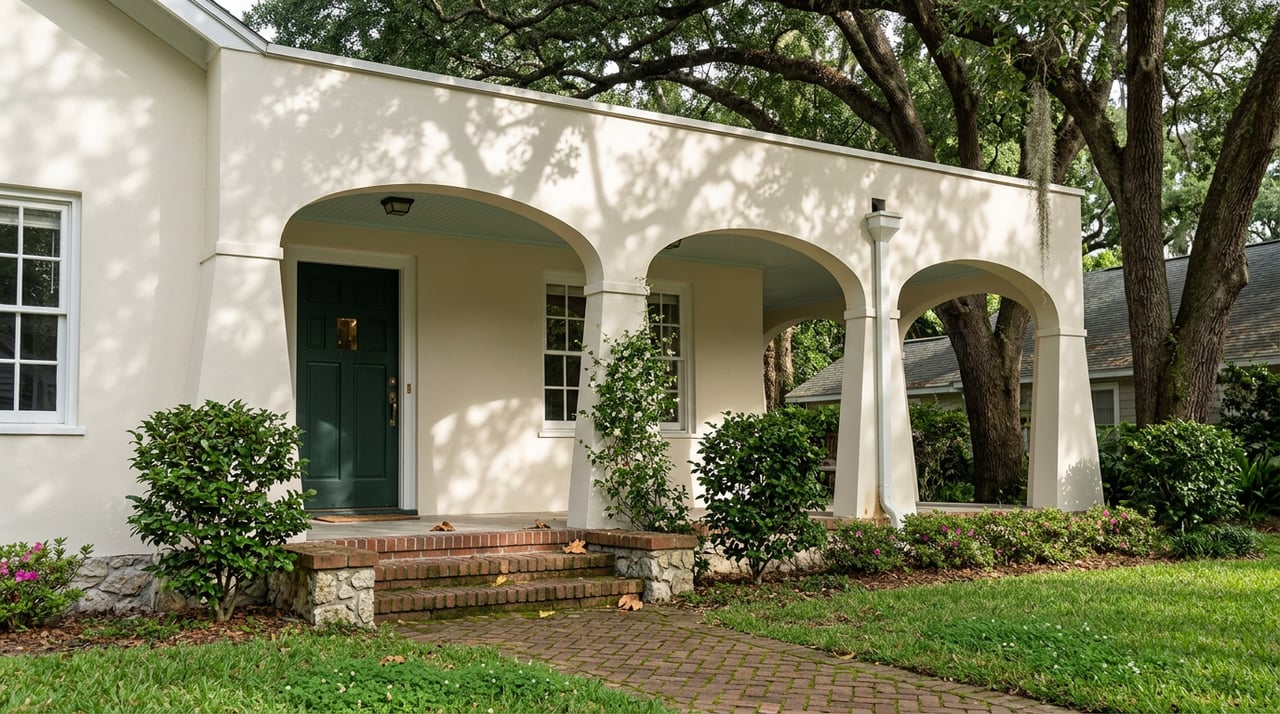
Picture a buyer three weeks into ownership of a bungalow near Boone Park. The paint is peeling on the porch rail, so they touch it up over a weekend, the same soft green it always was. A neighbor mentions, almost in passing, that the color change should have gone through the city first. Now there's a violation file open, and, according to the city's Historic Preservation FAQ, the fee to fix it on paper is double what it would have cost to ask permission before picking up a brush.
That is not a hypothetical penalty buried in fine print. It is how the Jacksonville Historic Preservation Commission actually processes work that starts before it is approved: the base application fee doubles for after-the-fact review. If you are buying in Riverside, Avondale, Springfield, or the St. Johns Quarter, that clock and that fee structure come with the house whether the listing mentions them or not.
Most buyers comparing these neighborhoods spend their energy on square footage and asking price. The number that actually decides what your money buys once you own the house lives somewhere else entirely: on a decades-old survey that marks each building as either "contributing" or "non-contributing" to its historic district.
The Rule Is The Same Whether The House Is $310,000 Or $900,000
Here is the part that surprises people who assume the fancier the block, the more freedom comes with it. The Certificate of Appropriateness requirement does not scale with price. Any exterior alteration inside a locally designated historic district, whether the home last sold for $310,000 or well into seven figures, has to clear the same city process before a building permit gets issued. Jacksonville's Planning and Development Department lists six locally designated historic districts, with Riverside-Avondale and Springfield among them, and the rule is blunt: exterior changes need a Certificate of Appropriateness from the Historic Preservation Commission first.
It is worth being precise about who actually holds that authority, because it is easy to assume the wrong group is in charge. Riverside Avondale Preservation and Springfield Preservation and Revitalization are the names most homeowners hear first, since they run the newsletters and the neighborhood events. But the city's own FAQ draws a clean line: those two organizations are nonprofit neighborhood groups not governed by the City of Jacksonville. The Certificate of Appropriateness itself is decided by the city's Historic Preservation Section and, for anything beyond minor scope, the Jacksonville Historic Preservation Commission.
That distinction matters at the negotiating table. A seller who says the neighborhood association already approved a renovation plan has told you something true about goodwill and nothing about permit eligibility.
The Word That Quietly Decides Your Renovation Ceiling
If the rule is identical across the district, why do two houses that look almost the same end up with completely different renovation timelines? The answer sits in a 1985 survey most buyers never ask to see.
When Riverside and Avondale were designated as historic districts, every building inside the boundary was catalogued as either "contributing" or "non-contributing" to the district's historic character. In Avondale alone, the Historic Preservation Guidelines for Riverside-Avondale count more than 800 buildings, with 715 classified as historic or contributing. The cutoff for contributing status in Avondale is construction during or before 1936. A home built in 1934 and one built in 1938 can sit three doors apart, look nearly identical from the sidewalk, and face very different levels of scrutiny the moment their owner wants to swap a window style, change a roofline, or add a addition.
This is the mechanism that actually explains a chunk of the price spread inside these neighborhoods, more than lot size or curb appeal ever will. A contributing bungalow with original windows and a roofline the commission wants preserved is a different renovation project, on a different budget and timeline, than a non-contributing infill home a block away with far more design latitude. Buyers comparing two similar asking prices are often, without realizing it, comparing two different levels of renovation freedom.
The Meeting You're Actually Waiting On
Even when a project clearly qualifies for approval, the calendar itself is part of the cost. The Jacksonville Historic Preservation Commission meets once a month, on the fourth Wednesday, and the city's own guidance says applications that need full commission review should be submitted about six weeks ahead of that meeting, roughly around the 15th of the prior month. Miss that window and the next chance is another month away.
Not every project needs the full hearing. The city's 2026 Certificate of Appropriateness Matrix separates work that can move through faster administrative review, handled by planning staff, from work that has to go in front of the full commission. That distinction, more than the price of the house, is what determines whether a renovation closes out in a few weeks or stretches across a full season. A buyer who assumes a permit is a same-week errand, because that has been true everywhere else they've owned a home, is the buyer most likely to get caught by this.
There is also a real cost to skipping the line. Per the city's FAQ, violation applications for work already started before approval carry a fee that is double the standard rate. Anyone planning to move fast on cosmetic updates before listing photos or move-in day should build that lead time into the plan rather than discover it afterward.
What This Means When Two Listings Look The Same On Paper
Riverside and Avondale sit under the same historic rulebook, share a border, and get lumped together constantly in market reports. Yet the pricing tells a more layered story. As of March 2026, the median sale price in Riverside sat at $410,000, up 3.8 percent year over year. Just across the district line, Avondale's average home value stood at $436,164 as of May 2026, itself down slightly from the year before, while active listings in Avondale carried a median list price of $649,500 as of early August 2026.
That spread cannot come from the regulatory framework alone, because the framework is identical on both sides of the line. What it more plausibly reflects is renovation state, contributing-status mix, and proximity to the commercial spine along St. Johns Avenue, where investment keeps landing. As recently as August 2026, Biscottis confirmed it is adding a private dining and event space at the Shoppes of Avondale. Taken together, those neighborhood factors do not show up in a square footage comparison, but they help explain what a buyer is willing to pay for two houses that look similar from the street.
For a buyer weighing Riverside against Avondale, the smarter question is not which neighborhood is more expensive on average. It is which specific house, contributing or not, already has the renovation done that you would otherwise be waiting on the fourth Wednesday of the month to start.
A Few Direct Questions
How do I find out if a specific house is contributing or non-contributing before I write an offer? The city's Historic Preservation Section maintains a district property list from the original 1985 survey, and the interactive land development review map lets you search by address to confirm historic district and landmark status before you're under contract.
Are Riverside Avondale Preservation and Springfield Preservation and Revitalization the ones who approve my renovation? No. Both are neighborhood nonprofits focused on advocacy and community programming. Approval authority rests with the city's Historic Preservation Section for minor work and the Jacksonville Historic Preservation Commission for anything requiring full review.
What happens if I do exterior work before getting a Certificate of Appropriateness? The city treats it as a violation application, reviewed after the fact, with the base application fee doubled compared to applying first.
If you are weighing a purchase in Jacksonville's historic core and want to know what a specific address actually allows before you fall for the curb appeal, Holly Reaves can walk you through the district status, the contributing designation, and what that means for your renovation plans before you write the offer, not after.
This article is general information, not legal, tax or financial advice. Consult a qualified professional about your situation.
