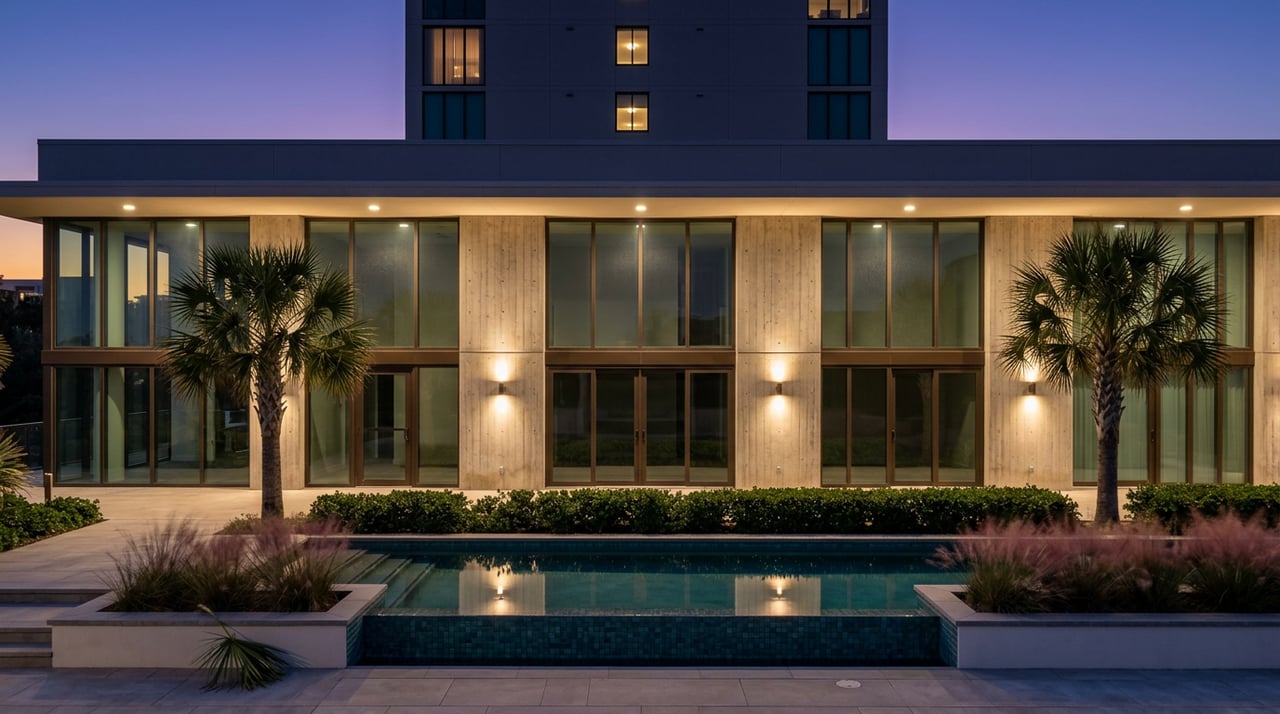
Ocean 14 sits at 1301 1st Street S, seventeen stories over the sand, 259 units deep, the kind of tower most buyers glance at from the beach and file under "1970s classic, probably needs a coat of paint." Its own homeowners association would tell you something more specific right now. As of this year, the building's board has been sending residents dated 2026 updates about an active restoration project tied to its milestone inspection, with exterior construction still underway and a board meeting on the calendar for late August to walk owners through where things stand. That is not a hypothetical building somewhere else in Florida. That is a building buyers are touring in Jacksonville Beach this month.
Here is what most people comparing oceanfront condos at the Beach get wrong. They assume the whole milestone inspection and reserve-funding story belongs to the obviously old buildings, the ones that read as vintage the moment you step off the elevator. In Jacksonville Beach, the line that actually matters isn't "does this building look old." It's a number: 25 years. And because of one quirk in how the city applies state law, that number is catching buildings people still think of as recent.
Every Building Here Gets The Coastal Clock, Not The Inland One
Florida's milestone inspection law, born out of the 2022 legislative response to the Surfside collapse, sets two different triggers depending on location. Buildings three stories or taller generally need their first structural inspection at 30 years old. But buildings within three miles of the coastline get pulled forward to 25 years, and then reinspected every decade after that.
Jacksonville Beach doesn't have a partial version of this. The city's own guidance is direct about it: every building in Jacksonville Beach sits within three miles of the Atlantic, so the 25-year trigger applies citywide, full stop. There's no inland pocket where the clock runs slower.
That single fact does the real work here. It means a condo built in 2001 already crossed the 25-year line. A building from 2002 crosses it in 2027, next year. Something completed in 2004 or 2005 is a handful of years out. None of these buildings look "old" in the way Ocean 14 or Seascape, built in 1976 and 1974, obviously do. But the statute doesn't grade on appearance. It grades on the certificate of occupancy date.
The Stock Here Came In Two Waves, And Both Are Aging In
Jacksonville Beach's oceanfront inventory isn't one uniform generation. The earliest wave, buildings like Seascape and Ocean 14, went up in the mid-1970s and has been through at least one full milestone cycle already, sometimes two. Then came a second wave tied to the early-2000s condo construction boom along the First Coast, when a run of new towers broke ground to meet demand from retirees, young professionals, and investors drawn to the coastline.
That second wave is the one worth watching right now, because it's aging into the 25-year mark on a rolling basis over the next several years. A building isn't exempt from this conversation just because it postdates the first oil-crisis-era towers. If it went up in the early-to-mid 2000s, its first milestone inspection is either recently completed, currently due, or a couple of budget cycles away.
Here's roughly how that timeline lays out for anyone comparing buildings by year built:
| Certificate of Occupancy | 25-Year Coastal Trigger | Where It Stands In 2026 |
|---|---|---|
| 2001 or earlier | Already passed | Milestone inspection required; many are due for their second decennial recheck |
| 2002 to 2004 | 2027 to 2029 | Approaching fast; first inspection not yet triggered |
| 2005 or later | 2030 and beyond | Not yet in the window |
A building's construction era tells you which column it's in. The MLS listing photo won't.
Same Price, Different Bill
This matters because Jacksonville Beach's oceanfront and ocean-view condo segment doesn't look particularly divided on paper. As of August 9, 2026, that segment carried a median list price of $775,000 across 64 active listings, averaging $612 per square foot, with the most recent 24 recorded sales landing at a median of $835,000. Two units at that price point, similar square footage, similar finish level, can sit in completely different places on the milestone timeline. One might be a building that already finished its restoration and is now funding routine reserves under the new rules. The other might be entering its first inspection cycle with a board that hasn't yet had to reckon with what full reserve funding costs.
That difference doesn't show up in price per square foot. It shows up in the monthly assessment, and potentially in a special charge layered on top of it.
The rules changed underneath all of this on January 1, 2026. Since that date, condo associations statewide can no longer waive or underfund reserves for the structural components identified in a building's Structural Integrity Reserve Study, things like the roof, load-bearing structure, waterproofing, electrical, and plumbing systems. For decades, boards could vote each year to keep those reserves artificially low to hold dues down. That option is gone for any building subject to the requirement. Associations that spent years deferring now have to fund the gap, either through higher monthly dues or a special assessment, and the ranges reported across the state for that kind of catch-up have run from a few thousand dollars per unit for smaller repairs to well over $100,000 for major structural or concrete work in the oldest, largest towers.
There's a piece of good news buried in the same legislation. Starting this year, associations with 25 or more units are required to post their governing documents, budgets, and reserve studies online, which means the information that used to live in a filing cabinet at the property manager's office is now something a buyer can actually ask for and expect to see before writing an offer.
What To Ask For Before You Write An Offer
For a building three stories or taller in Jacksonville Beach, the paperwork that actually answers the cost question is specific and gettable:
- The most recent milestone inspection report, if the building has crossed the 25-year mark, including whether it triggered a follow-up Phase 2 review
- The current Structural Integrity Reserve Study and how fully each structural line item is funded against that study's recommendation
- The last two years of board meeting minutes, read for any discussion of upcoming assessments or deferred projects
- The association's insurance declarations page, particularly the wind and hurricane deductible, since a large deductible after a storm can itself trigger an assessment
- The building's certificate of occupancy date, so you know exactly where it sits against the 25-year clock rather than guessing from the lobby finishes
None of this requires a specialist. It requires asking for documents the association is now required to make available, and reading them before the inspection period closes rather than after.
What This Means If You're Comparing Buildings
The inventory at the Beach spans a real range, from established oceanfront names that have already been through a milestone cycle to early-2000s boom towers now approaching their first one, up through the newer luxury addresses further up the price ladder. None of that history is a reason to avoid a building. A clean milestone report and a fully funded SIRS are a genuine asset, arguably more valuable than a fresh coat of paint, because they mean the structural questions have already been asked and answered. What the law changed is how much a buyer can know before closing, not whether the underlying costs exist.
The number worth writing down before your first showing isn't the median price. It's the year on the certificate of occupancy, and where that year falls against 25.
A Few Direct Questions
Does a condo built in 2003 in Jacksonville Beach need a milestone inspection yet? If it hasn't already had its first one, it's close. The 25-year coastal trigger for that building lands around 2028, and boards typically start preparing well before the deadline.
Is a newer building automatically a safer buy? It's likely earlier in the cycle, which can mean lower near-term costs, but newer buildings still owe a fully funded SIRS under the 2026 rules. Ask for it regardless of the building's age.
Who pays if a special assessment gets approved after I'm under contract but before closing? That's a negotiation point between buyer and seller, and it's exactly why requesting the association's recent minutes and reserve study early in your search, not during your ten-day inspection window, gives you room to actually negotiate rather than react.
If you're weighing an oceanfront unit against a marsh-front one, or trying to figure out what a building's age actually means for your monthly costs down the line, that's the kind of building-by-building read Holly Reaves does before a client ever writes an offer. Work With Holly if you want someone pulling the paperwork alongside you, not after.
