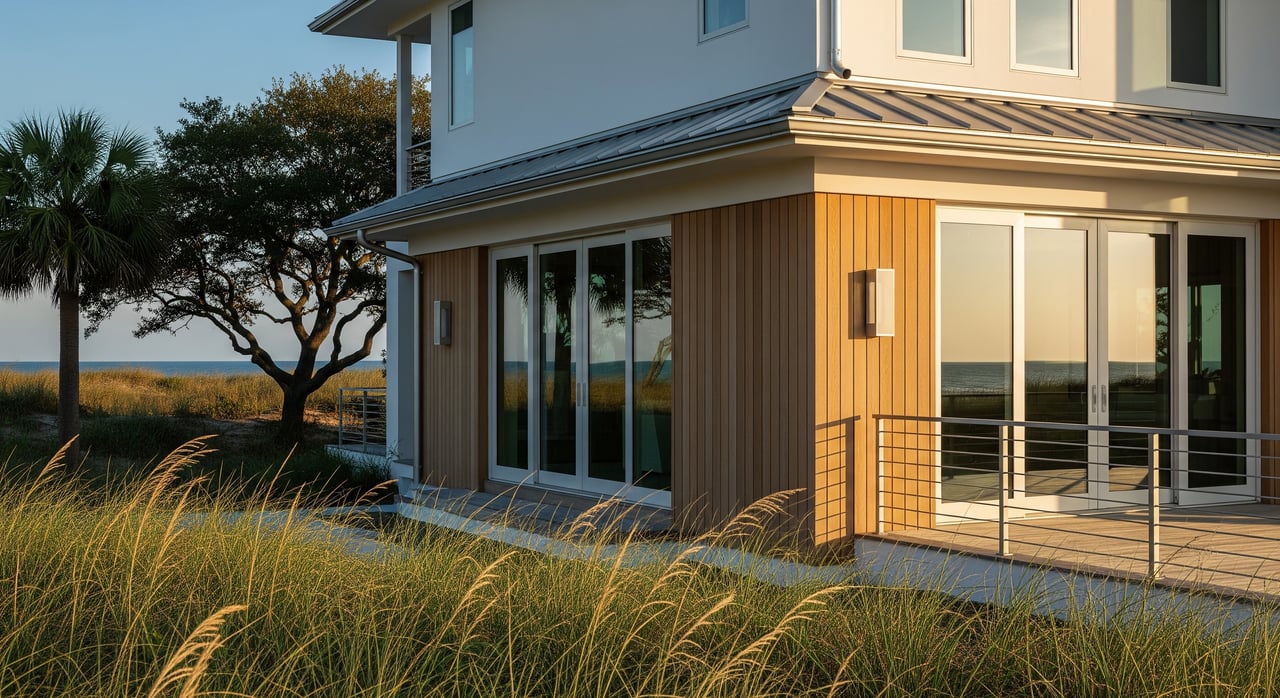
Salt air, sun, and storm season can be tough on homes in Ponte Vedra Beach. If you are building, buying new construction, or planning updates, the right materials make all the difference in how your home looks and lasts. You want a coastal look that stands up to humidity and wind without constant upkeep.
In this guide, you will learn which exterior, interior, and landscaping materials perform best in Ponte Vedra Beach’s climate, plus simple maintenance tips and a contractor checklist. You will walk away with practical, design-forward choices that protect your investment and your peace of mind. Let’s dive in.
Climate and priorities
Ponte Vedra Beach sits on the Atlantic, with salty breezes, high humidity, strong UV, and seasonal storms. These conditions accelerate corrosion, fade finishes, and push wind-driven rain into weak points. Sandy soils and flood risk add extra considerations for foundations and ground-floor finishes.
Focus your material choices on four priorities:
- Corrosion resistance for metals and hardware
- Moisture management with proper drainage planes and flashings
- Wind and impact performance for roofing and glazing
- Low-maintenance finishes that handle UV, salt, and humidity
Exterior cladding
Your wall system matters as much as your siding. Always include a continuous water-resistive barrier with careful flashing and a drainage gap behind the cladding.
- Fiber cement siding: Resists rot and insects and handles humidity well. It needs quality paint and routine inspections but holds up beautifully with proper detailing.
- Stucco over cementitious base: Durable in Florida when paired with a correct WRB and control joints. Avoid thin or improperly detailed systems that trap moisture.
- Masonry or brick veneer: Low-maintenance and long-lived if weeps and through-wall flashings are done right.
- Engineered wood or composite: Only choose products rated for high humidity and UV. Confirm coastal warranty language.
Avoid untreated natural wood on exposed elevations unless you commit to frequent sealing and repainting.
Coastal roofing
Roofs take the brunt of wind and salt, so material and installation quality are key.
- Standing-seam metal: Galvanized steel with premium PVDF coatings or coastal-grade aluminum offers long life and strong wind performance. Inspect coatings and flashings periodically.
- Concrete or clay tile: Classic Florida look and very durable. Tiles must be properly anchored for wind uplift, and framing has to be sized for the added weight.
- High-wind architectural shingles: Select products rated for local wind speeds and ensure correct underlayment and fastening.
Use corrosion-resistant fasteners, ideally 316 stainless in direct exposure. Pair the roof with a code-compliant underlayment and balanced attic ventilation to reduce heat and moisture.
Impact windows and doors
Impact-rated windows and doors are recommended in coastal zones and often required by code or insurers. You will see aluminum-clad, vinyl, or fiberglass frames paired with laminated glass to resist windborne debris and pressure.
- Frames: Aluminum-clad, reinforced vinyl, or fiberglass with corrosion-protective finishes perform well near salt air.
- Doors: Fiberglass exterior doors offer excellent durability and stability.
- Hardware: Choose marine-grade 316 stainless for hinges, locksets, and exterior fasteners. Avoid plain brass or untreated steel near the ocean.
Proper installation with head flashings, sealed sills, and a continuous WRB is as important as the product you choose.
Trim and fasteners
Finish details often fail first in salt air. Durable trim and fasteners keep your envelope tight.
- Trim and soffits: Fiber cement or cellular PVC for rot resistance. If you use wood, specify preservative-treated material and keep up with finishes.
- Flashings and gutters: Coated aluminum or stainless steel. PVDF-coated metals keep color and resist corrosion.
- Connectors and screws: 316 stainless steel for exposed locations in coastal air. Hot-dipped galvanized may be acceptable in protected interior cavities.
Decks and patios
Outdoor living spaces need slip resistance, UV stability, and low water absorption.
- Decking: Capped composite or PVC decking is low maintenance and moisture resistant. For a natural look, dense tropical hardwoods like Ipe work well with stainless fasteners and regular oiling.
- Patios and pool decks: Porcelain pavers are non-porous, slip-resistant options that stand up to salt and sun. Sealed natural stone and concrete pavers also perform when maintained.
- Railings: Powder-coated aluminum rated for coastal exposure or capped composite systems with hidden stainless fasteners reduce rust and upkeep.
Choose lighter colors where possible to reduce heat build-up under strong sun.
Interior materials
High humidity and potential storm exposure call for finishes that can dry out and resist mold.
- Ground floors: Porcelain or ceramic tile, sealed concrete, or flood-tolerant luxury vinyl plank with sealed edges. Avoid solid hardwood at grade unless the home is elevated above flood levels.
- Upper floors: Engineered hardwood is more dimensionally stable than solid wood in humidity. Luxury vinyl plank is another durable, quiet option.
- Wet areas: Use cement backer board behind shower tile. Moisture-resistant gypsum board helps in humid spaces, but it is not a substitute for cement board in showers.
- Cabinets and hardware: Water-resistant plywood substrates and stainless hardware perform best. Avoid particleboard in damp locations.
HVAC and moisture control
Proper dehumidification is essential. Right-size your AC, keep coils clean, and ensure condensate drains are clear. In homes with persistent humidity, consider whole-house dehumidification. Seal and insulate ductwork and consider corrosion-resistant coil treatments suited for coastal environments.
Coastal landscaping
A Florida-friendly, salt-tolerant landscape can reduce water use and storm clean-up.
- Plants: Use native and salt-tolerant options like sea oats, muhly grass, beach sunflower, yaupon holly, wax myrtle, coontie, seaside rosemary, sabal palm, and live oak placed away from dune edges.
- Hardscape: Favor permeable pavers, crushed shell, or permeable concrete to reduce runoff and help drainage.
- Irrigation: Drip or targeted micro-spray with smart controllers and rain sensors keeps water use low.
If you are beachfront, preserve dune vegetation and confirm any dune work with local and state rules before you begin.
Maintenance checklist
A simple routine extends the life of coastal materials.
- Rinse exterior metal, glass, and furniture with fresh water: quarterly oceanfront, semiannual elsewhere.
- Inspect roof, flashings, and gutters: every spring and after major storms. Clean gutters at least twice a year.
- Check window and door seals and re-caulk as needed: annually.
- Refinish wood decking and reseal joints per manufacturer guidance. Composites need periodic cleaning.
- Service HVAC, clean coils, and confirm condensate drainage: every 6 to 12 months.
- Inspect and test irrigation systems and controllers: seasonally.
Costs and insurance
Some coastal-grade materials cost more up front, but they often reduce repainting, repair, and replacement over time. Impact windows, upgraded roof tie-downs, and code-compliant installations can help with insurance in some cases. Always confirm local requirements under the Florida Building Code and check with your insurer. Choose contractors who can document coastal installation experience and manufacturer-approved details.
Contractor questions
Ask these before you sign:
- Do you have Ponte Vedra Beach or St. Johns County coastal project experience and references?
- How will the assembly manage moisture drainage and ventilation, including the WRB, flashings, and any rainscreen gap?
- What fasteners and corrosion protection will you specify, and where will you use 316 stainless?
- Can you provide impact and wind-rating documentation and install to Florida Building Code requirements?
- Are proposed plants and hardscape materials permitted near dunes, and will any permits be required?
Bringing it together
The best coastal homes in Ponte Vedra Beach combine design-forward finishes with smart, durable materials. When you pair fiber cement or masonry cladding, a wind-rated roof, impact glass, and corrosion-resistant details with humidity-smart interiors and native landscaping, you get a home that looks beautiful and lives easier.
If you want recommendations tailored to your property, local code guidance, or help coordinating updates before a sale, connect with Holly Reaves. You will get white-glove, design-led advice grounded in real coastal experience.
FAQs
What siding holds up best in Ponte Vedra Beach’s salt air?
- Fiber cement, properly detailed stucco over a cementitious base, and masonry veneers perform well when paired with a continuous WRB, flashings, and a drainage gap.
Which roof is most reliable for coastal wind and salt?
- Standing-seam metal with a premium coastal coating, properly anchored concrete or clay tile, and high-wind architectural shingles are all solid choices when installed to spec.
Are impact-rated vinyl windows acceptable in hurricane zones?
- Yes, if they are impact-rated and installed to meet local wind-load and code standards. Reinforced frames and laminated glass are key.
What exterior hardware resists corrosion near the ocean?
- Marine-grade 316 stainless steel is the most commonly recommended option for exposed hinges, fasteners, and locksets in coastal air.
What flooring should I use on a flood-prone ground floor?
- Porcelain or ceramic tile, sealed concrete, or flood-tolerant luxury vinyl plank are better than hardwood at grade in moisture-prone areas.
How do I manage indoor humidity in a coastal home?
- Right-size the HVAC, clean coils regularly, ensure proper condensate drainage, and consider whole-house dehumidification if humidity remains high.
What should I ask landscapers about dune-side projects?
- Confirm native, salt-tolerant plant selections, erosion-control methods, and whether local or state permits are required before altering dunes.
